Independent Economic Analysis · 2026
Boston Housing Market and AI Crisis
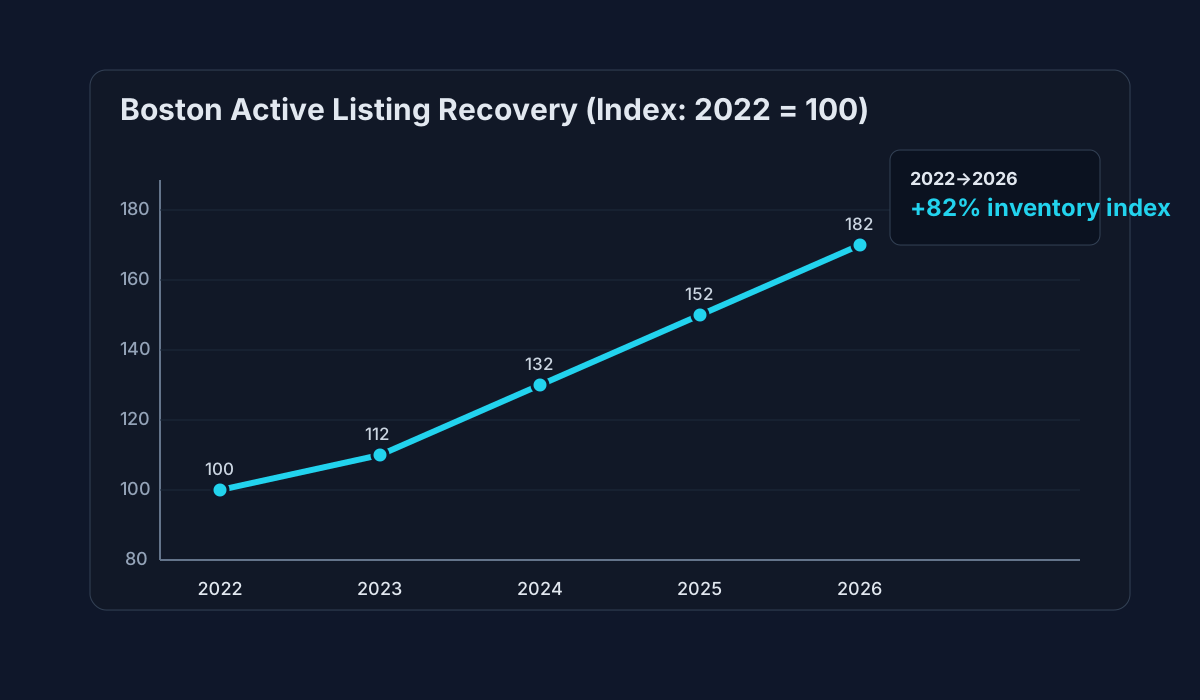
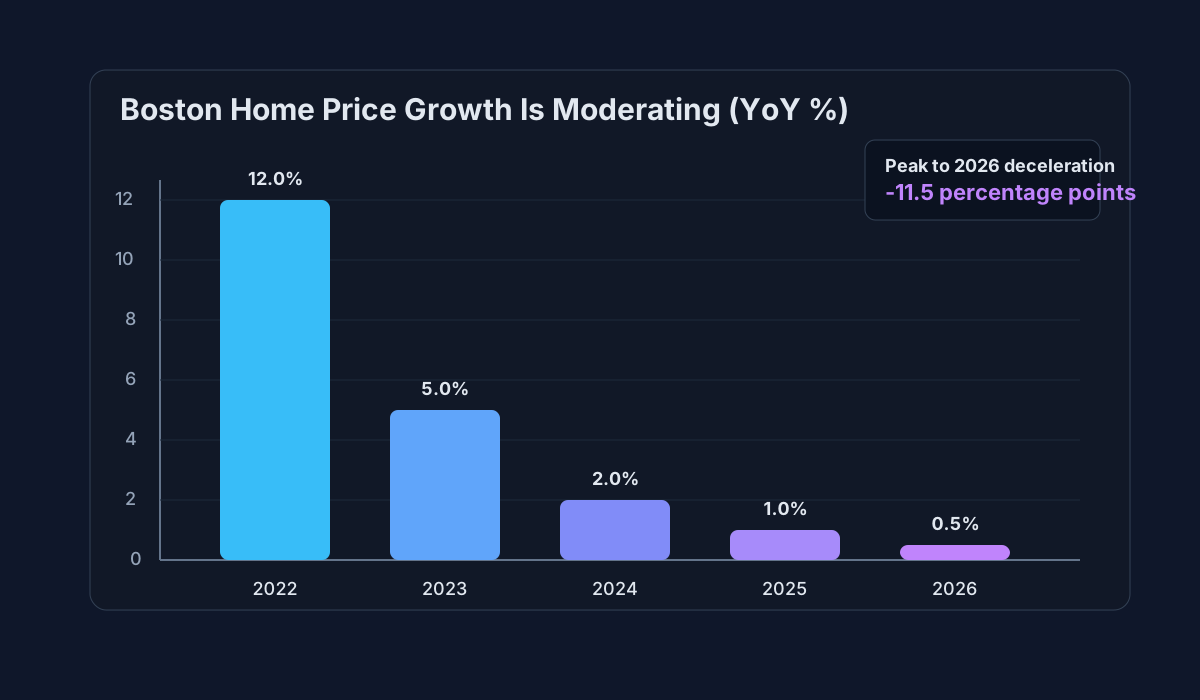
Boston's housing market is shifting from seller control to buyer leverage in 2026. More listings, longer time on market, and moderated pricing are widening the negotiation window for qualified households.
In parallel, AI adoption is changing labor risk. This report frames AI as an exoskeleton for many knowledge-work roles: a force multiplier that raises output per worker and supports wage resilience for adaptable teams.
Executive Summary
The strategic opportunity in 2026 is a dual reallocation: negotiate housing from a stronger demand-side position while investing in AI-assisted skill depth to protect long-run earnings power.
- Housing pressure is easing relative to 2021-2023 peaks, improving buyer optionality.
- Renting remains operationally flexible, but buying captures downside-adjusted upside during moderation.
- AI capability rewards workers and firms that combine domain expertise with tool fluency.
Key Findings
Demand-side leverage is improving
Inventory recovery is expanding selection and reducing urgency-driven bids.
Price growth is moderating
Nominal prices remain high, but acceleration has cooled, improving entry conditions.
Affordability gap remains meaningful
Buy decisions still require materially higher income than rent in most urban submarkets.
AI adaptation is now a household variable
Career resilience increasingly depends on integrating AI into daily execution.
Boston Housing Market Metrics
Rent vs. Buy Affordability Paradigm
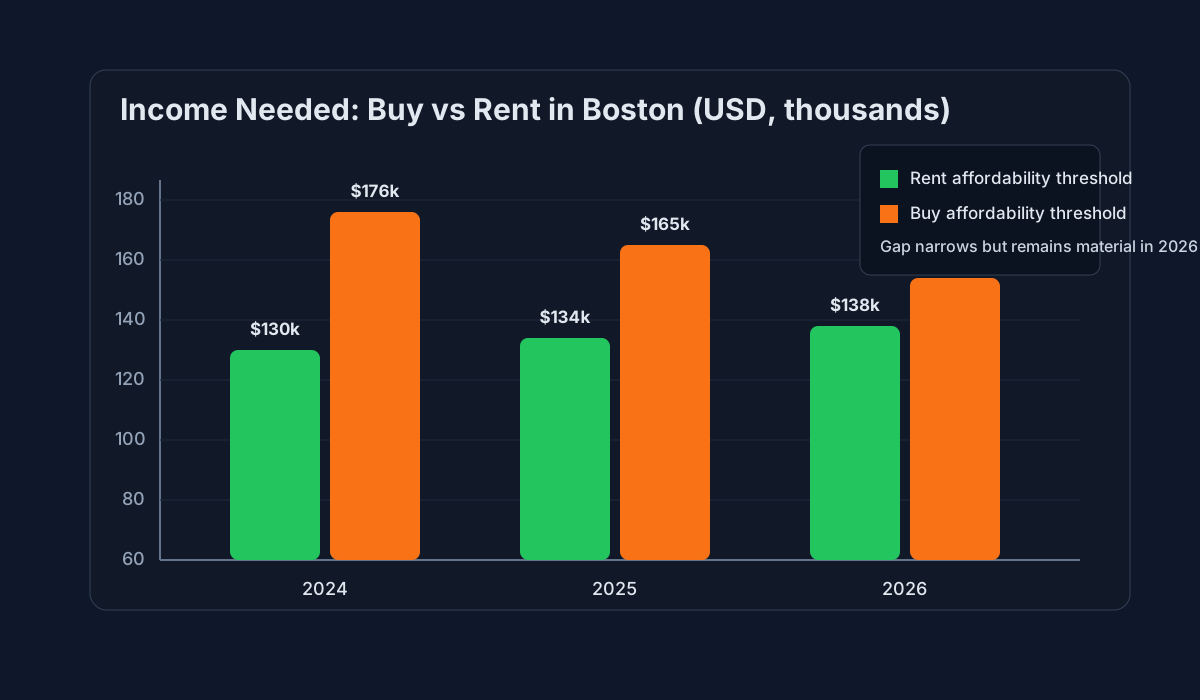
Renting remains the lower-friction operating mode for mobility and liquidity. Buying becomes attractive when households have stable cash flow, multi-year horizon, and the ability to negotiate favorable terms.
Buyer-Friendly Shift
- Longer decision windows: More listings and slower deal velocity reduce forced, same-week commitments.
- Negotiation leverage: Contingencies, credits, and inspection terms are returning in selected price bands.
- Quality filtering: Buyers can prioritize resilience features (location, transit, school stability, maintenance profile) over fear-driven bidding.
Exoskeleton Effect
The Exoskeleton Effect describes AI as a performance layer around human talent. Instead of replacing entire teams, AI can extend analytical range, reduce cycle time, and improve execution quality per employee.
Output lift
Routine synthesis and first-draft work accelerate, allowing higher-value human judgment to scale.
Risk compression
Faster iteration reduces project uncertainty and supports more disciplined capital allocation.
Wage resilience
Workers who integrate AI into domain workflows are better positioned in compensation and retention cycles.
Interpretation
Housing and labor dynamics should be read together. If the buyer environment is improving while AI raises productivity for adaptable professionals, the strategic posture is to preserve optionality while upgrading earning durability.
Practically: maintain liquidity, negotiate patiently, and prioritize neighborhoods and property types with long-run utility. At the same time, invest continuously in AI-enabled workflows to defend income trajectory.
Conclusion
Boston in 2026 is not a distressed market; it is a rebalancing market. For prepared buyers, this creates a better entry regime than recent years. For professionals, AI adaptation is no longer optional for long-horizon income security.
The winning strategy is integrated: treat home acquisition as a negotiated capital decision and treat AI capability as a core component of household financial resilience.