Tech Economist Insight · Spotify
Spotify's Freemium Engine: Discovery, Ads, and Subscription Conversion as One Mechanism
Spotify is often framed as a simple subscription business. In practice, it operates a coordinated mechanism: ad-supported listening acquires users and generates behavioral data, personalization improves engagement, and high-intent cohorts convert to Premium for better experience and utility.
The system works when free-tier economics and paid-tier economics are optimized jointly, not independently. The free tier is not merely a discount channel; it is a screening and learning layer in a repeated game with listeners, creators, and advertisers.
1) Hook Intro
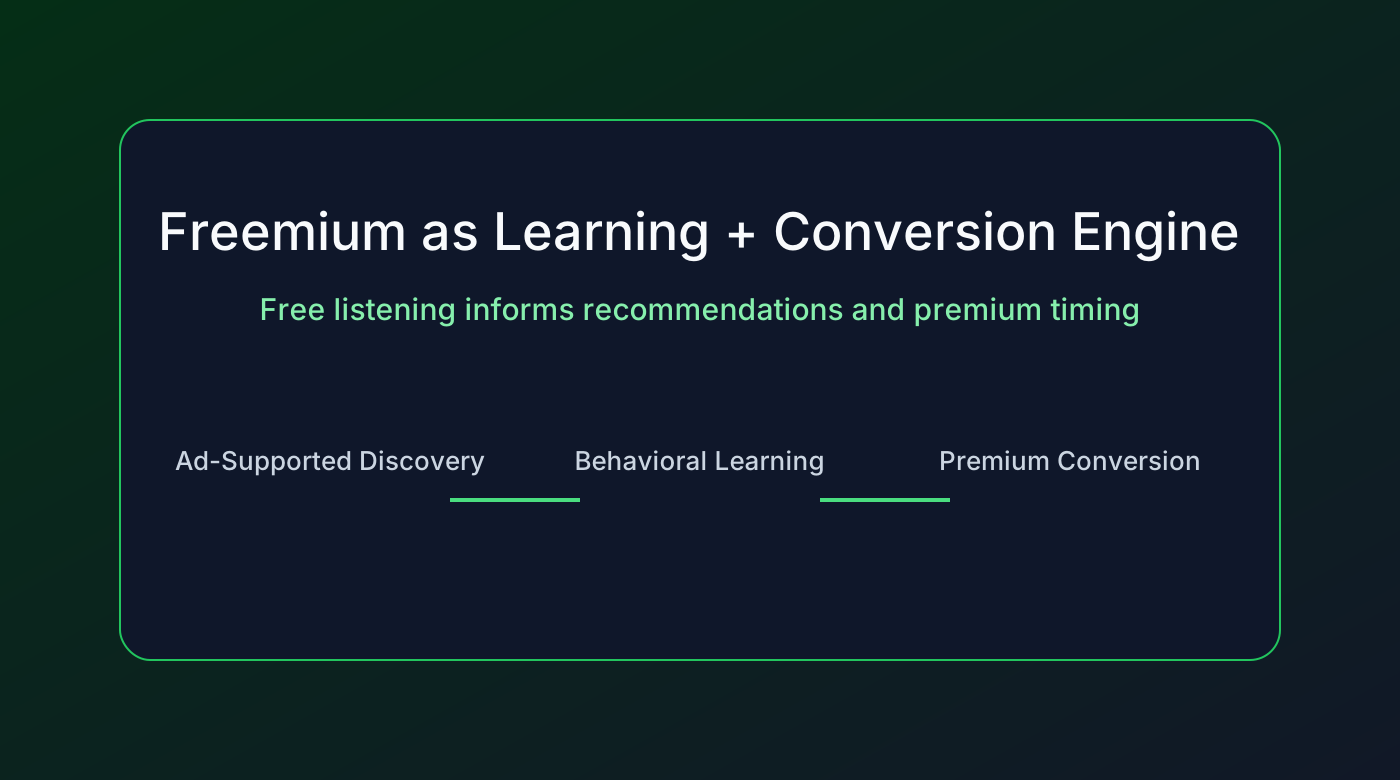
The strategic edge is not just catalog breadth. It is the ability to convert listening behavior into recommendation quality and conversion timing decisions that increase lifetime value per user.
2) Problem Framing with Examples
Example A: Casual listener on free
A user streams occasionally, tolerates ads, and has low willingness to pay. Immediate conversion pressure would likely fail and waste promotion budget.
Example B: Heavy mobile commuter
Daily listening, repeated skips, and offline usage interest indicate strong paid utility. Timed Premium offers can convert this cohort efficiently.
The key challenge is dynamic segmentation: identify who should stay in ad-supported mode versus who is ready for subscription conversion, while preserving user satisfaction.
3) Step-by-Step Mechanism Walkthrough
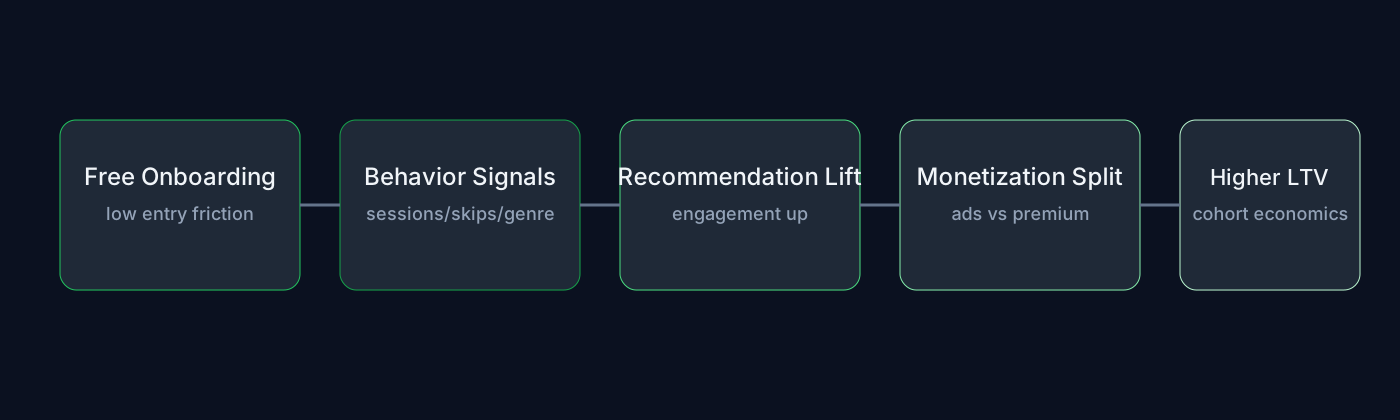
- Low-friction entry: Users join free tier with no upfront payment commitment.
- Behavior capture: Listening patterns, skips, session length, and context signals train recommendation quality.
- Engagement lift: Better personalization increases session frequency and habit strength.
- Monetization branching: Some users monetize through ads; others receive targeted Premium offers when expected conversion probability is high.
- Retention reinforcement: Premium users with strong personalized libraries and playlists exhibit higher switching costs and subscription stickiness.
4) Simple Math Intuition
A blended-LTV simplification: Expected LTV = (Ad ARPU × Free Months) + (Premium ARPU × Paid Months × Conversion Prob.).
- Assume free-tier ad ARPU = $1.20/month and average free duration = 8 months.
- Premium ARPU contribution after rights and fees = $4.50/month net, with 24 paid months average.
- If conversion probability improves from 8% to 11%, expected paid contribution rises materially.
- The resulting LTV gain can justify recommendation and lifecycle-marketing investment.
Directionally, the economic objective is to maximize blended cohort value, not force universal paid conversion.
5) Key Economic Concepts
Mechanism design
Freemium rules, ad load, and conversion prompts are designed to steer user paths toward high long-run value rather than short-run extraction.
Adverse selection
If only low-intent users remain in free tier, ad yield and engagement can deteriorate. Product design must keep free-tier quality sufficient to attract diverse cohorts.
Repeated games
Recommendation and monetization decisions are repeated daily; each session updates beliefs about user type and future willingness to pay.
Incentive alignment
Listeners want relevance, creators want discovery, advertisers want attentive audiences, and Spotify wants sustainable monetization. The funnel must balance all four.
Platform externalities
More listener activity improves recommendation quality and inventory depth, which attracts advertisers and creators, reinforcing ecosystem value.
6) Practical PM/Analyst Playbook
Build cohort-level funnel maps
Track conversion and retention by acquisition channel, geography, and device to avoid blended illusions.
Optimize prompt timing, not only offer size
Conversion propensity is state-dependent; context-aware prompts often beat blanket discounts.
Use ad load as a control variable
Ad intensity should balance short-run revenue with long-run engagement and conversion probability.
Model creator-side effects
Changes in discovery and monetization mechanics affect catalog health and creator participation over time.
7) Misconceptions and Limitations
- Misconception: “Free users are just a cost center.”
Reality: free users can be profitable through ads and can become future Premium subscribers.
- Misconception: “Maximum ad load always maximizes revenue.”
Reality: excessive ad load can hurt engagement, weakening both ad and subscription outcomes.
- Limitation:
Royalty economics, contract structures, and regional pricing variation make public ARPU and margin interpretations approximate rather than exact.
8) Mini Glossary
- Freemium
- A model where a free product tier coexists with paid upgrades for higher-value features.
- ARPU
- Average revenue per user, often measured monthly for monetization benchmarking.
- Conversion propensity
- The estimated probability that a user upgrades to paid in a given context.
- Switching cost
- The friction of moving to an alternative service, including playlists, habits, and recommendations.
9) Sources
Official sources first
- Spotify Investor Relations reports and shareholder letters
- Spotify Newsroom product and monetization updates
- Spotify for Artists resources on discovery and royalties context
Trusted secondary